traces its roots directly to Okinawa, the birthplace of Traditional Karate. It carries the name in honour of its founder and inspiration, Soke Shigeru Kimura, whose relentless pursuit of improvement shaped the style we practice today.
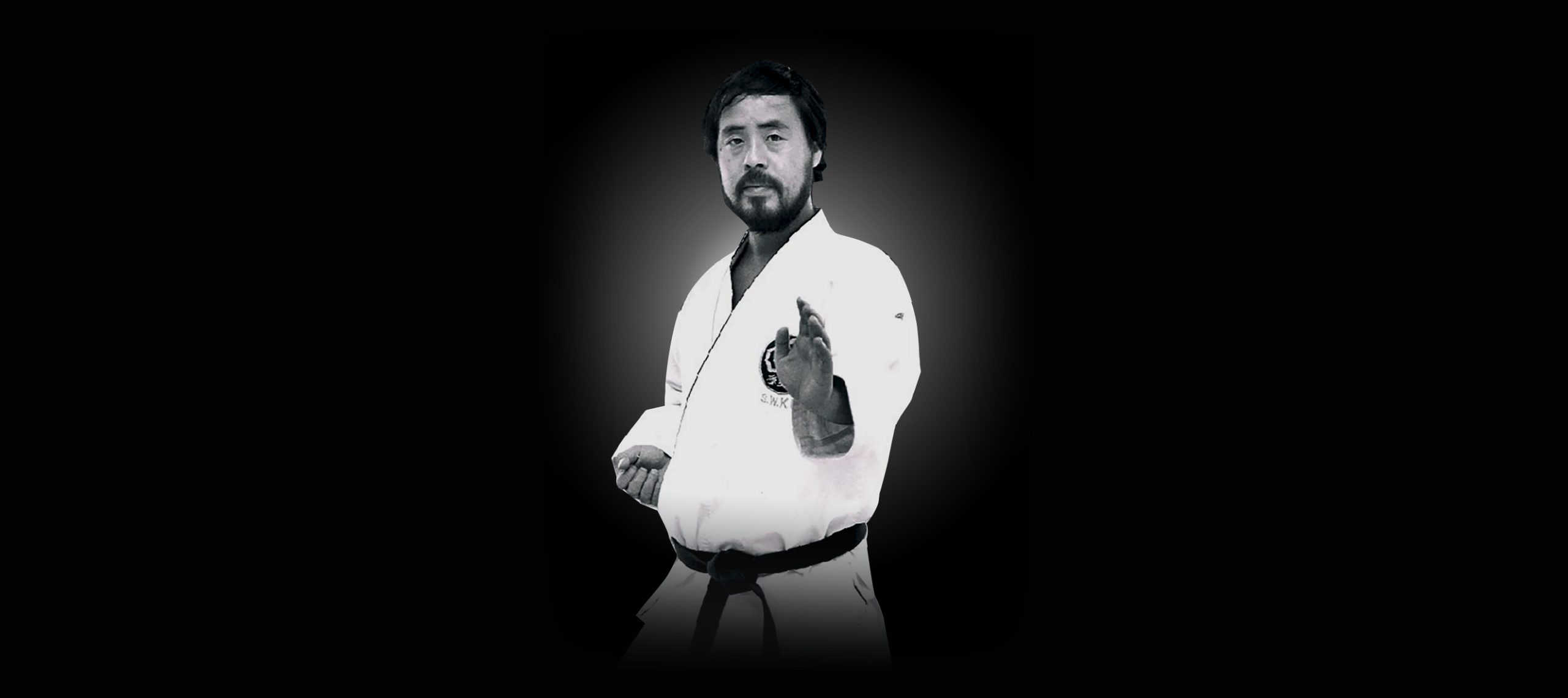
SOKE SHIGERU KIMURA
Those who trained under Soke Shigeru Kimura were struck with awe. Restless in spirit and endlessly curious he was never satisfied with the status quo – always questioning, refining and striving to perfect both himself and his Karate. Born on 2 March 1941 in Kobe, Japan, Kimura Sensei was an energetic child who began Judo at the age of 10 and later trained in Kendo. His true Karate journey began in 1957, at the age of 16, when he became a student of Chojiro Tani – Soke.
Tani Sensei, himself a student of masters Chojun Miyagi and Kenwa Mabuni, had developed his own style that was shaping Shukokai Karate around 1946. His teachings emphasised body mechanics, precision and efficiency. With Tani Sensei’s encouragement, Kimura Sensei began to explore how these principles could be developed even further. Kimura Sensei adopted a scientific approach to Karate, meticulously testing and refining techniques to maximise speed, power and effectiveness. His dedication led to new breakthroughs that reshaped his own technique and legacy.
In 1965, with Tani Soke’s blessing, Kimura Sensei travelled to Southern Africa to spread his evolving art. Arriving without English, he nonetheless communicated through Karate itself, teaching in Zimbabwe, Mozambique and South Africa. His ability to connect through movement and spirit left a lasting legacy across the continent.
Tragically, on 7 July 1995, the Karate world was shaken by Kimura Sensei’s sudden passing from a heart attack at just 54 years old. At the time, he held the rank of 9th Dan, later being posthumously awarded his 10th Dan. Following his passing, his senior students established Kimura Shukokai International (KSI) to preserve and promote his unique vision – Kimura Shukokai Karate, a living art that embodies his pursuit of mastery and spirit of continuous improvement.
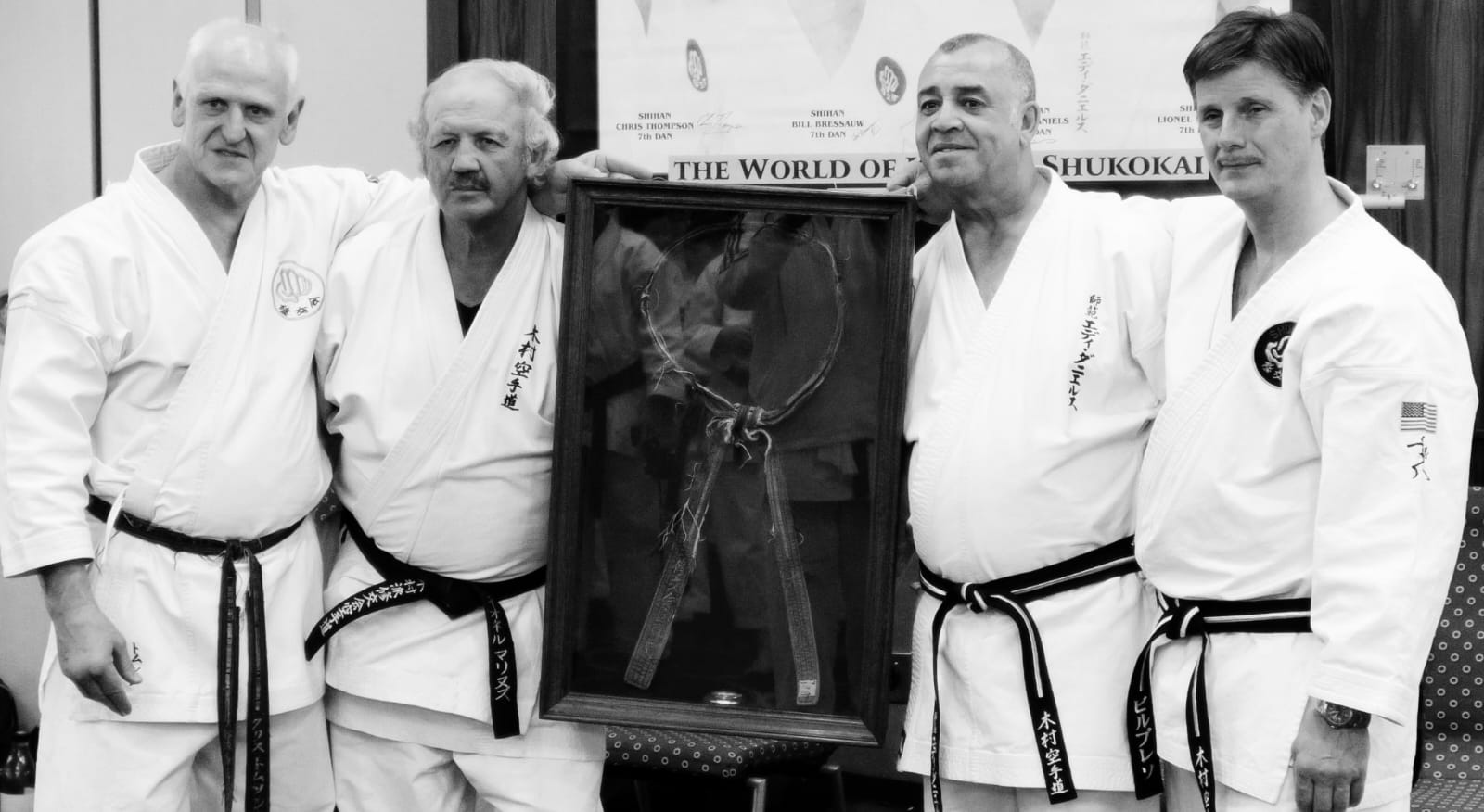
KSI Joint World Chief Instructors
SHIHAN CHRIS THOMPSON (South Africa South)

SHIHAN CHRIS THOMPSON
(South Africa South)
Shihan Chris Thompson from South Africa South holds a 2nd Dan in Kyokushinkai, 2nd Dan in Okinawan Gojo Ryu and 9th Dan in Kimura Shukokai and serves as one of the four Joint World Chief Instructors of KSI. He commenced training under Kimura Sensei in 1971 and over more than five decades has devoted himself to advancing Kimura Shukokai Karate. Under his leadership the region is continuing to grow in its search for further understandings and abilities.
SHIHAN LIONEL MARINUS (South Africa North)
SHIHAN LIONEL MARINUS
(South Africa North)
Shihan Lionel Marinus (9th Dan) is the Chief instructor for the Northern Region of South Africa and one of the Joint World Chief instructors. His Karate journey began in 1965 earning his Shodan in 1967 and later achieving higher dan rankings. Shihan Lionel contributed to the growth and evolution of KSI in South Africa North as well as KSI International in many significant ways.
SHIHAN BILL BRESSAW (United States) 
SHIHAN BILL BRESSAW
(United States)
Shihan Bill Bressaw, 9th Dan, is the Chief Instructor of the American Shukokai Karate Union and one of KSI’s four Joint World Chief Instructors. He began training under Kimura Sensei in 1971 and played a key role in establishing KSI in the U.S. His decades of dedication include founding dojos in the US and mentoring countless students both technically and competitively.
SHIHAN EDDIE DANIELS (United Kingdom) 
(1949 – 2020)
SHIHAN EDDIE DANIELS
(United Kingdom)
(1949 – 2020)
Shihan Eddie Daniels was a highly respected 9th Dan instructor from Great Britain and one of the original Joint World Chief Instructors. He began training under Kimura Sensei in 1968 and was the most senior European region Instructor until Kimura’s passing in 1995. Although Shihan Daniels passed away in 2020, his legacy continues to help shape Kimura Shukokai.